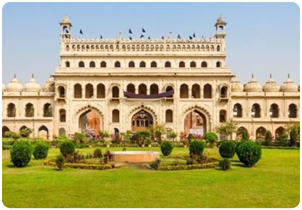
Also known as Asafi Imambara, is an imambara complex in Lucknow, India, built by Asaf-ud-
Daula, Nawab of Awadh, in 1784. Bara means big. An Imambara is a shrine built by Shia
Muslims for the purpose of Azadari. This imambara is the second largest after the Nizamat
Imambara.
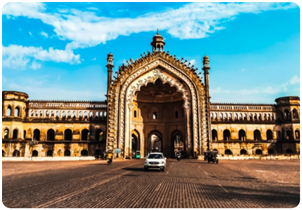
Rumi Darwaza, in Lucknow, Uttar Pradesh, India, is a gateway which was built by Nawab
Asaf-Ud-Daula in 1784. It is an example of Awadhi architecture. The Rumi Darwaza
stands sixty feet tall and was modeled after the Sublime Porte in Istanbul.
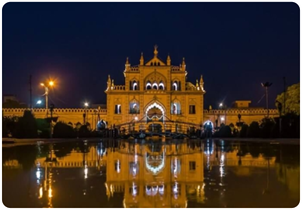
Chota Imambara, also known as Chhota Imambara, or Imambara Hussainabad Mubarak is
a monument located in the city of Lucknow, Uttar Pradesh, India. It took 54 years to build.
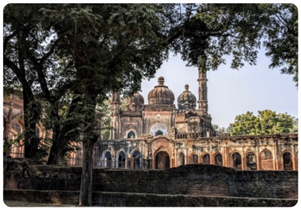
The Residency, also called as the Bri sh Residency and Residency Complex, is a group of
several buildings in a common precinct in the city of Lucknow, U ar Pradesh, India. It served
as the residence for the Bri sh Resident General who was a representa ve in the court of the
Nawab of Awadh or Oudh. The Residency of Lucknow, one of the Residencies of Bri sh India,
is located in the heart of the city, in the vicinity of other monuments like Shaheed Smarak,
Tehri Kothi and the High Court Building.
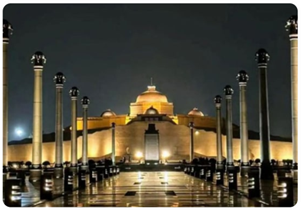
Dr. Bhimrao Ambedkar Samajik Parivartan Sthal, (formerly Ambedkar Memorial Park)
is a public memorial in Gom Nagar, Lucknow, U ar Pradesh, India. The memorial is dedicated
to Dr. B. R. Ambedkar, an Indian Dalit ac vist and the first law minister of India.
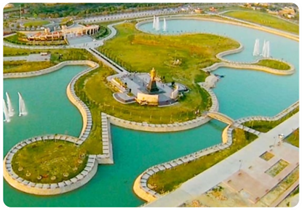
Janeshwar Mishra Park is an urban park opera ng in Gom Nagar in Lucknow, India. It
was named in memory of late poli cian Janeshwar Mishra from Samajwadi Party.
Lucknow is celebrated for its exquisite Chikankari embroidery, a centuries-old craft that
reflects the city’s elegance and royal heritage through delicate handwork on fine fabrics.
Equally famous is its rich culinary culture, offering iconic dishes like kebabs, biryanis, and
sweets that embody the Nawabi flavors and hospitality the city is known for. Together,
they make Lucknow a true blend of artistry and taste.